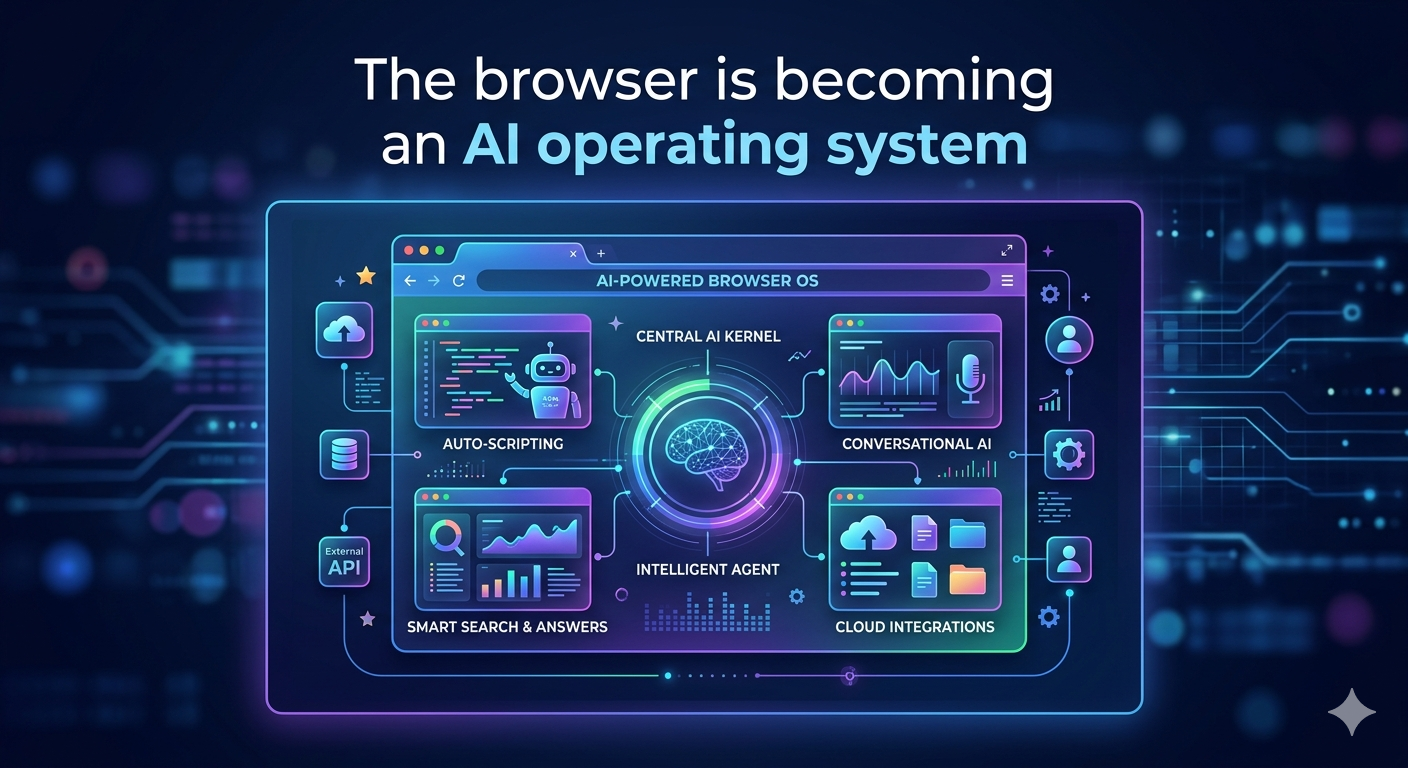
Browsers are evolving from simple interfaces into AI execution environments. As tools like ChatGPT and Claude begin operating directly inside the browser, web developers must start designing not just for humans, but for autonomous AI agents navigating, interacting, and completing workflows on the web.
Browsers are no longer just places where humans click links and fill out forms.
With tools like Opera’s new AI-native browser features and MCP-style integrations, AI agents can now operate inside the browser itself — interacting with the web much like a real user.
According to Opera Newsroom, browsers are starting to expose workflows directly to AI systems like OpenAI’s ChatGPT and Anthropic’s Claude.
That means AI can increasingly:
- read and reason over active tabs
- navigate websites autonomously
- fill forms and submit workflows
- interact with authenticated sessions
- coordinate multi-step tasks across tools
- act more like an operator than a chatbot
This changes web development fundamentally.
We’re no longer designing only for humans using keyboards, touchscreens, and menus.
We’re now designing for:
- autonomous agents
- machine-driven workflows
- AI-assisted navigation
- programmatic user experiences
The browser is evolving from:
“a window to the internet”
to:
“an execution layer for AI.”
That shift changes how we think about frontend engineering.
Future-ready products will likely need:
- AI-readable interfaces
- structured workflows
- predictable navigation states
- agent-friendly authentication
- semantic UI patterns
- APIs that complement visual interfaces
In many ways, websites are becoming environments that both humans and AI agents must understand and operate.
The next era of frontend development may not be defined by responsive design alone — but by agent-compatible design.
2026 web development is going to look very different.
#webdevelopment #aiagents #frontend #mcp #chatgpt #claude #webdesign #developer #ai #uxdesign